

Artists know something public life needs: how to create, listen, revise, and continue together.
A child can learn to keep score long before learning how to keep a conversation open.
Who finished first? Who got the highest grade? Who made the team? Who has the most followers? Who won the argument?
These questions become familiar through repetition. Eventually, they can begin to sound like the only questions that matter.
We carry them into workplaces, relationships, and public life. We describe elections as horse races, policy disagreements as battles, and a cutting remark as a victory. Someone has been defeated. Someone has been humiliated. Our side is winning.
And then we wonder why living together feels so difficult.
Competition has its place. It can sharpen skills, inspire effort, and produce extraordinary achievements. Sports can teach trust, discipline, and responsibility to teammates. Video games can require intricate cooperation, shared invention, and collective problem-solving.
A contest usually has agreed rules and a defined outcome. Public life keeps going. However, a society must continue living together after the score is announced.
When we import the logic of defeating an opponent into every human encounter, ordinary differences become harder to navigate. Another person’s achievement becomes a threat. Changing our minds feels like surrender. Compromise becomes evidence of weakness.
We learn to ask whether we have prevailed before asking whether anything has improved.
Much of this instruction happens without anyone calling it instruction.
A classroom can reward the highest individual score while giving less attention to what students discover together. A workplace can celebrate its star performer while overlooking the people who make everyone’s work possible.
A community can devote enormous attention to a contest while barely noticing the patient work of people building something in common.
Our Screens Add Another Layer
In a 2021 Yale study, researchers found that positive feedback for expressions of moral outrage increased the likelihood that people would express outrage again. Likes and shares helped teach the behavior that produced more likes and shares.
Repeated often enough, a behavior can begin to feel normal, expected … even necessary.
This does not make every grievance false or every angry person manipulated. Anger can be a necessary response to cruelty and injustice. But an environment that repeatedly rewards its expression can make anger seem like the principal language of public life.
And the loudest exchange becomes our picture of humanity.
What Might We Discover Under Different Conditions?
Consider a rehearsal.
An actor must listen closely enough for another person’s words to change what happens next. A musician must hear the other instruments while playing their own. A dancer must remain aware of bodies moving through shared space.
A film requires people with different skills to make thousands of decisions in relation to one another. Costume, lighting, editing, sound, performance, and design must contribute to something none of them could produce alone.
Even the apparently solitary arts invite a different kind of attention.
A writer works to make another person’s experience imaginable. A visual artist asks us to look longer. A quilt can carry the knowledge of generations through the decisions of a single maker. A story can hold conflicting truths without immediately declaring a winner.
These practices develop observation, interpretation, communication, experimentation, and revision. They also teach something public life desperately needs: how to remain engaged when the outcome is uncertain.
A rehearsal can fail without canceling the production. A draft can change without humiliating its author. Someone else’s idea can improve the work without diminishing our contribution.
We can disagree and still have something to make together.
Of course, the arts have no automatic claim to virtue. Films can glorify domination. Music can mobilize hatred. Images can dehumanize. Stories can make oppression seem natural or inevitable. Artists also compete for jobs, recognition, audiences, and resources.
The question is which possibilities we choose to cultivate.
Imagine the Possibilities
Imagine students receiving sustained opportunities to make a film, write a play, build an installation, or compose music together. Their individual skills would matter. So would their ability to listen, revise, and help a group accomplish something.
Imagine public meetings where residents could use drawing, storytelling, performance, and design to communicate experiences that a three-minute speech cannot hold.
Imagine community events that gave people a shared task alongside a shared audience: making a mural, gathering neighborhood histories, creating a procession, or redesigning a neglected public space.
Imagine political campaigns making room for people to describe the future they want in language richer than a slogan about “fighting” the other side.
The humanities belong in this work as well. History asks how our arrangements came to exist. Philosophy asks what we owe one another. Literature allows us to encounter lives we have never lived.
Together, these practices widen the questions available to us.
Who benefits? Whose experience is missing? What are we assuming? What are the opportunities?
What Would We Choose to Strengthen?
Res Creativa‘s Opportunity Docket will include this possibility: giving collaboration, communication, and shared creation greater weight in education and public life through the arts and humanities.
That means time, resources, places to practice, and artists involved in shaping the work. It means treating creative participation as a capacity worth developing throughout a person’s life.
We do not have to agree about everything to begin. Making something together can give us a reason to listen before agreement exists.
Perhaps we share more hopes than our feeds reveal. Perhaps some differences will remain profound. Either way, we need ways to encounter one another that leave us capable of continuing.
Every classroom, platform, institution, and public gathering shapes how we live together.
We have become very practiced at keeping score.
Let’s become equally practiced at making something together.
A version of this post was also published on Substack, Oct. 13, 2026
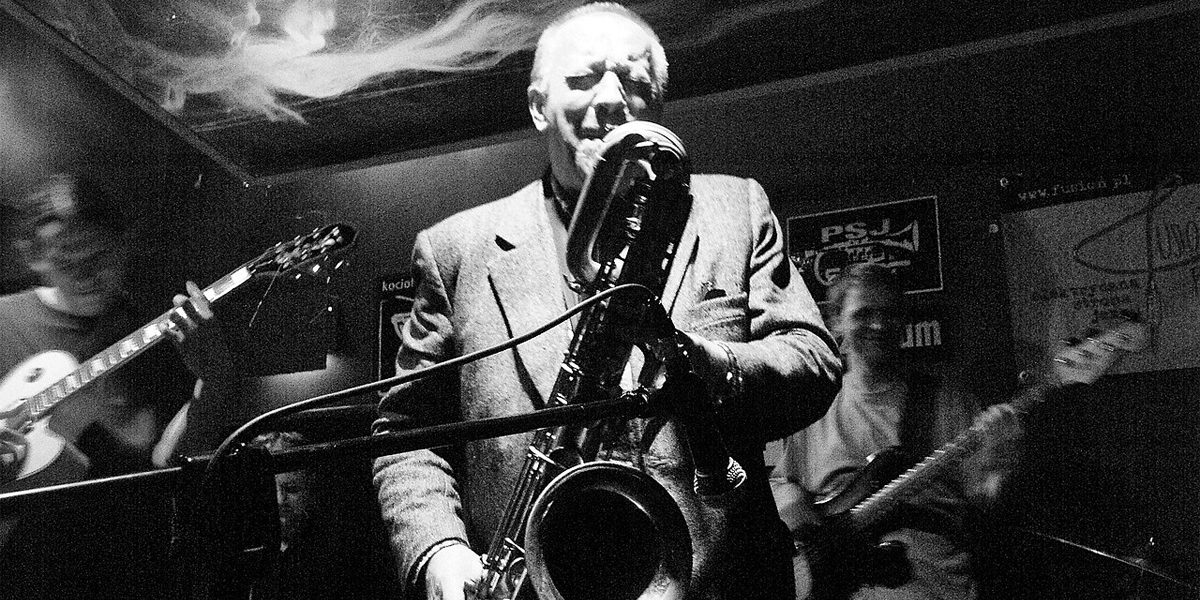
Banner image: Waldemar Kurpiński and Tress Jazz band at the Tygmont Live Club (2004) in Warsaw, Poland. Photo by Andrzej Barabasz, Wikimedia Commons, CC BY-SA 4.0
